
Good flooring starts with what is underneath it. Whether you are installing wood flooring, parquet, vinyl or another floor covering, taking the time to correctly prepare the subfloor can make a significant difference to the quality and longevity of the finished installation.
Problems such as old adhesive, coatings, levelling compound, surface contamination and uneven areas can all affect how successfully a new floor is installed. Professional subfloor preparation is therefore about creating a clean, smooth and stable surface before any new flooring goes down.
In this guide, we look at the key stages involved and when specialist floor preparation equipment can make the job faster and more effective.
Assess the Existing Subfloor
Before starting any preparation work, inspect the entire floor and identify what you are working with.
Look for issues such as:
- Old flooring adhesive or residue
- Paint and previous floor coatings
- Existing levelling compounds
- High spots and uneven surfaces
- Cracks or damaged sections
- Loose or contaminated material
- Areas requiring additional repair
The correct preparation method will depend on both the substrate and what needs to be removed. A relatively clean subfloor may only need minor preparation, while a surface covered with hard adhesive or old coatings can require more aggressive mechanical treatment.
Remove the Existing Floor Covering
Any carpet, vinyl, wood flooring or other existing covering needs to be fully removed before you can properly assess the subfloor.
Floor stripping equipment can make this process considerably easier on larger or more demanding projects. Once the covering has been removed, you may find adhesive, backing material or other residues remaining on the surface.
This is where the next stage of preparation becomes particularly important.
Remove Adhesive and Coating Residues
Old adhesive is one of the most common problems encountered during flooring renovation.
Leaving significant adhesive residue behind can create an uneven surface and interfere with primers, levelling compounds or the new flooring system. Depending on the type and condition of the material, mechanical grinding can provide an effective method of removing stubborn residues.
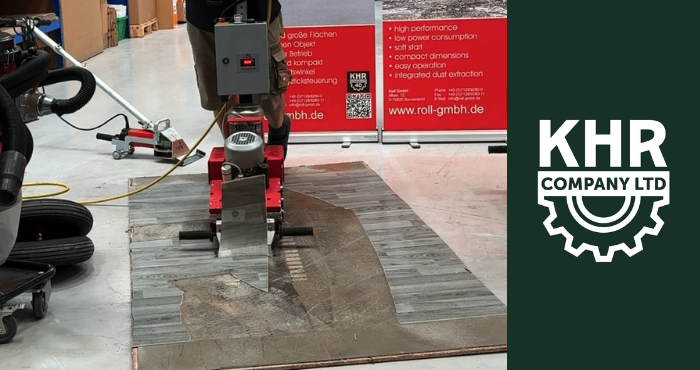
Professional floor grinding machines are designed to tackle materials including floor covering residues, adhesives, levelling compounds and coatings. For example, the ROLL RO-300 available from KHR is specifically designed for demanding surface preparation and the removal of these types of materials.
Deal With High Spots and Uneven Surfaces
Not every uneven floor needs to be completely covered with additional levelling material.
Where the problem is caused by localised high spots, hardened residue or excess compound, grinding the affected areas can help create a more consistent surface before the next preparation stage.
Smaller grinding machines can be particularly useful where access is limited or where the project does not justify larger equipment. The ROLL RO-250, for example, has a 250mm working width and is designed for surface preparation across small to medium-sized areas.
Edges also need consideration. Large preparation machines cannot always work tight against walls or reach confined areas, so specialist edging and grinding equipment may be required to achieve consistent preparation across the whole floor.
Choose the Correct Grinding Disc
The machine itself is only part of the setup. Choosing the correct grinding disc is equally important.
Different surfaces and residues require different levels and types of abrasion. KHR stocks grinding discs for applications including the removal of adhesives, coatings and levelling materials, with options such as diamond, PCD, hybrid and carbide-based discs available for different preparation requirements.
Using the correct disc helps improve productivity while reducing unnecessary passes over the floor.
Before starting, always check that the selected accessory is suitable for both the machine and the material being removed.
Control Dust During Floor Preparation
Grinding concrete, screed, adhesives and other flooring materials can create significant quantities of dust.
Professional preparation equipment should therefore be combined with suitable dust extraction wherever possible. Some grinding machines are specifically designed to work with extraction equipment to reduce airborne dust and create a cleaner working environment.
The ROLL RO-250, for example, incorporates a dust extraction connection specifically to support dust-controlled surface preparation.
Keeping dust under control also makes it easier to inspect the surface as work progresses.
Repair and Level the Subfloor
Grinding and mechanical preparation do not necessarily represent the final stage.
Once residues and high spots have been dealt with, inspect the surface again. Cracks, damaged sections or low areas may need repairing before the floor is ready for installation.
Depending on the project, you may then need:
- Subfloor primer
- Repair compound
- Self-levelling compound
- Screed
- Damp-proofing products
- Flooring adhesive
KHR's wider subfloor preparation range includes primers, levelling compounds, parquet adhesives and other materials designed to support professional flooring installations.
Make Sure the Surface Is Ready for Flooring
Before installing the new covering, the subfloor should be clean, stable and appropriately prepared for the flooring system being used.
Check that:
- Loose material has been removed
- Adhesive and coating residues have been adequately treated
- High spots have been addressed
- Repairs have cured correctly
- Levelling products have been applied where necessary
- Dust and contamination have been removed
Skipping preparation might save time at the beginning of a project, but problems underneath the finished flooring can become much more difficult to correct later.
Choose Professional Floor Preparation Equipment
The right equipment can make challenging preparation jobs much more manageable. KHR supplies professional ROLL floor preparation machines, including equipment for grinding, stripping and working around difficult edge areas. The current range includes machines suited to everything from smaller preparation jobs to larger commercial projects.
For contractors who want to see the equipment in action before investing, KHR also offers practical ROLL surface preparation demonstrations covering grinding and stripping across different surface types.
Preparing a difficult subfloor? Explore KHR’s range of professional floor grinding machines and find the right equipment for your next surface preparation project.